Node Internal Architecture
Each node in the dAIEdge network deploys a layered architecture that allows it to interact with the middleware and other nodes. This structure separates concerns and ensures modularity.
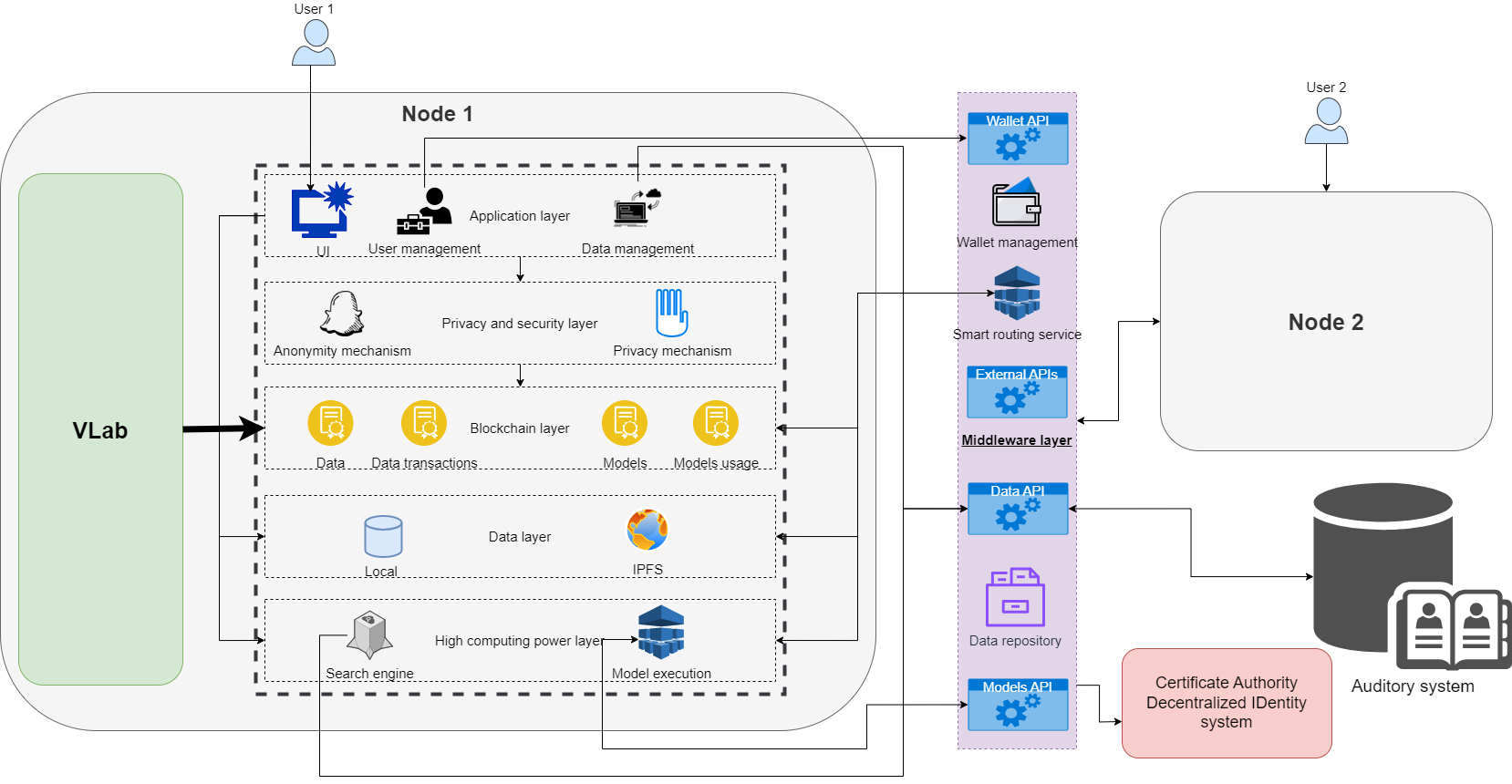 Figure 2:
Layered Architecture of a Node
Figure 2:
Layered Architecture of a Node
The layers are:
- Application Layer: The user-facing interface for managing a node’s resources, credentials, and network interactions.
- Privacy Layer: Protects the privacy and integrity of data through access control (Role-Based Access Control - RBAC), data encryption, and identity management.
- Blockchain Layer: The core communication channel to the outside network. It uses an Ethereum-based implementation (Hyperledger Besu) to handle transactions, manage model and data registries, and execute smart contracts.
- Data Layer: Stores the resources (datasets, models) that a node wishes to share. It acts as a local data catalogue and uses a distributed file system like IPFS for resilient storage.
- High-Computing Power Layer: An optional layer that connects the node’s core to specialized hardware (GPUs, TPUs) for benchmarking or computation-intensive tasks, abstracting their heterogeneity.